Where Bone Jewelry Actually Comes From
It didn't start with bones
I started with flowers, a camera, and too much time alone in the forest. The bones came later, gradually, the way most things that stick around tend to arrive.
Growing up in the Estonian countryside, I was outside whenever I could be. My siblings watched TV, played games, did the things you're supposed to do indoors. I was on my bike or in the forest. Not because I was particularly outdoorsy in any performed sense. I just found it more interesting than the alternative. There was always something to find.
When I was around fourteen I started taking that seriously with a camera. Nature photography. I won a few awards over the next three years, which surprised me less than it probably should have. I was spending more time in the field than most adults who called themselves photographers. You find things when you're paying attention. That's most of what photography is, and most of what making anything is.

The camera taught me to look at things carefully before touching them. That habit didn't leave when I put it down.
From flowers to bones
The first jewelry I made was resin with dried flowers. Epoxy to start, then UV resin once I understood why the old way was making my life harder than it needed to be. Preserved botanicals under glass, basically. It felt like an extension of what I was already doing. Taking something from nature and holding it still. Making something temporary last.
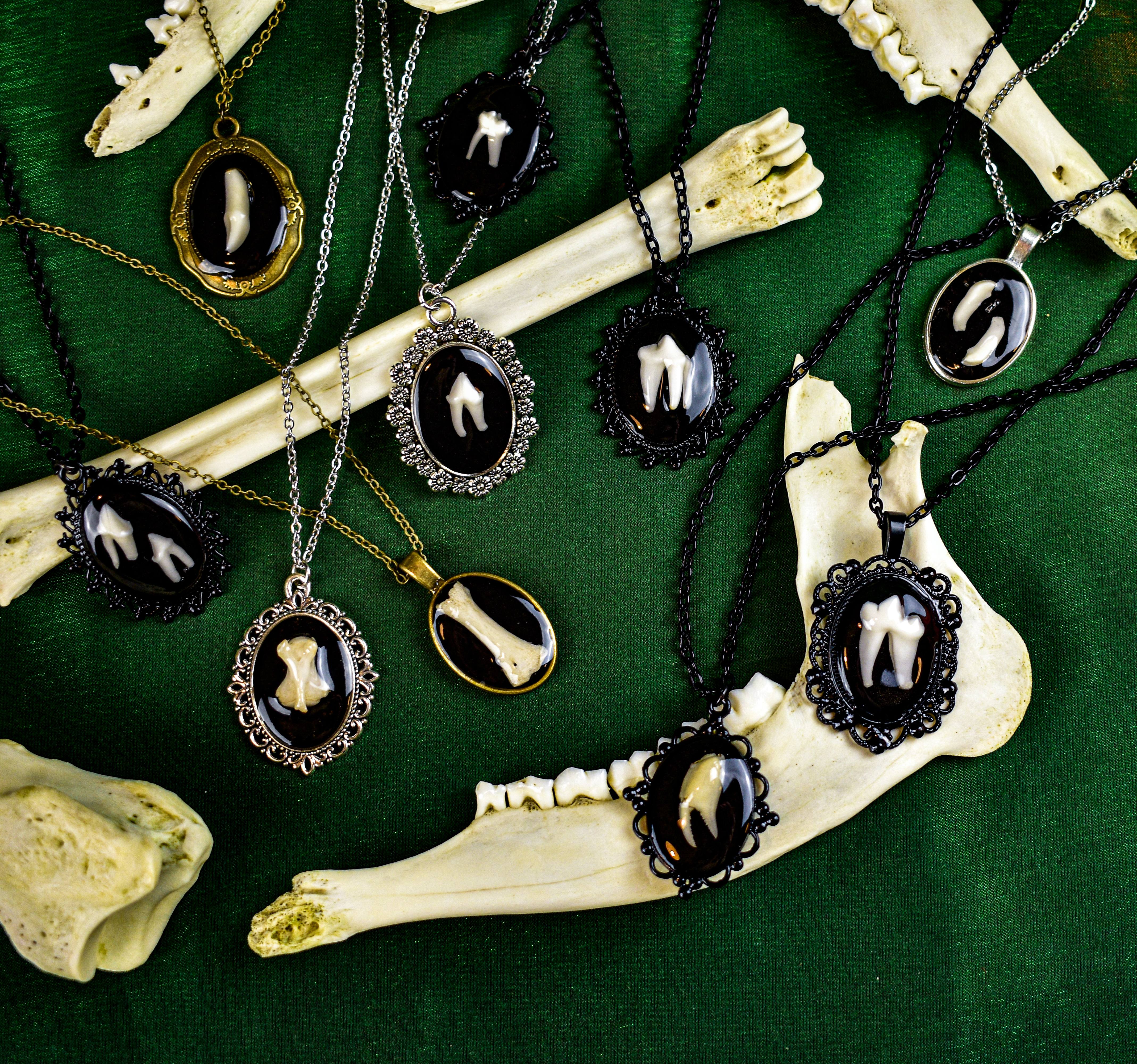
Bone arrived the same way flowers did. I found things. A small skull on a forest path. The clean white remnants of something that hadn't made it through winter. I picked them up the way I always picked things up, with the understanding that I was handling something that had been alive and was now something else.

Where the material comes from
I don't buy bones if I can avoid it. It matters to me where things come from. The bones I work with are found in Estonian forests, or picked up from roadsides. Animals that didn't make it, given a second existence in the studio. There's no sentimentality in that, just a straightforward respect for the material. If something died, the least you can do is make sure that death was not in vain. That something is born out of that death.
Owl pellets are where the small bones come from. Owls swallow their prey whole and regurgitate the indigestible parts: bones, fur, teeth. in compact pellets you find beneath their roosting spots. Dissecting them is slow work. Mouse vertebrae are small enough that you need good light and patience. But they're also some of the most structurally interesting bones I work with. There's something precise about them.

The scale of it
On the other end of the scale: boar jaws. Raccoon skulls. The full spine of a deer. These take time to prepare: cleaning, degreasing, waiting. Bone is not a material that tolerates impatience. You learn that quickly or you ruin things.
What I make now looks nothing like dried flowers in resin. A statement necklace built around a raccoon skull with fox paws and roe deer antler involves months of material preparation before I touch a single tool. But the logic behind it is the same as it was when I was pressing flowers at fourteen. Take something real. Preserve it carefully. Make it into something that carries what it was.
On the question of morbid
People ask sometimes whether it's morbid. I've never found a good answer to that because I've never found it morbid. Death is part of what forests are. The owl pellets, the roadkill, the skull on the path. None of that is dark to me. It's just accurate. The jewelry I make is accurate in the same way. It doesn't pretend the animal wasn't an animal. That feels more honest than most things you could put around your neck.
The nature photography awards are in a box somewhere. The camera still gets used. But the forest is where the work comes from now, the same as it always did. I just come back with different things in my pockets.